August 2, 2023
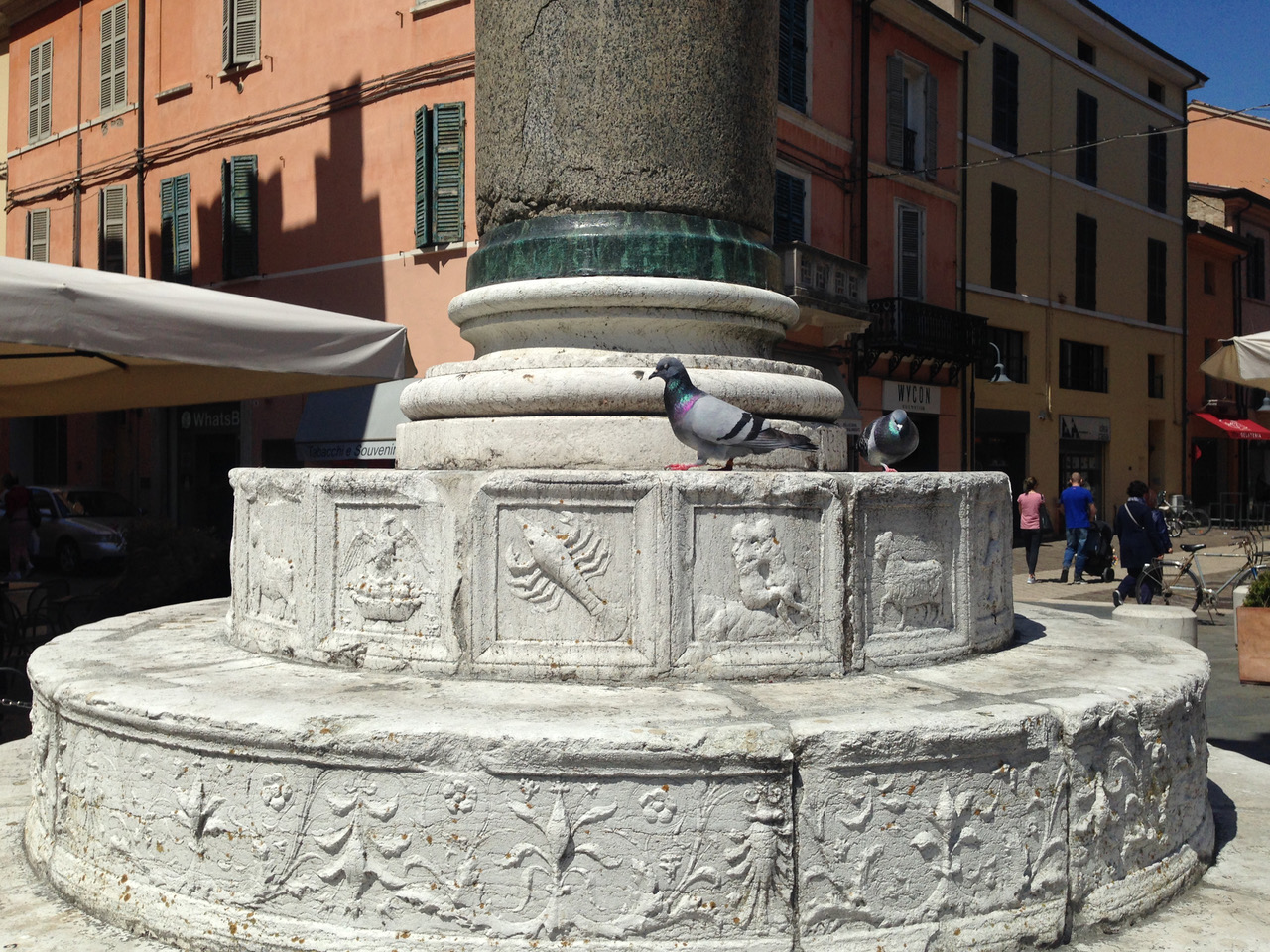
Russi, a town of hidden charm, just as its treasures are hidden. A place known for the traditional Fira di Sett Dulur, a village festival dedicated to the Madonna of the Seven Sorrows, whose image, so dear to the people of Russi, is kept in the 18th-century Chiesa dei Servi. Dating back to the 1600s, the fair, alongside today’s entertainments, offers the now-famous Bel e côt, a cotechino sausage boiled in water to be enjoyed with a good glass of Canèna Nòva wine.
Russi is a town that reveals its history to the attentive visitor at every corner, step by step. But calling it a town is not entirely accurate, as in 1878 it obtained the title of “City” by Royal Decree, thanks to the intense patriotic work carried out by its illustrious citizens – Luigi Carlo Farini, Domenico Antonio Farini, and Alfredo Baccarini. Their legacy can be relived today through a ten-stage Risorgimento trail representing its historical memory: the house where Alfredo Baccarini died, the Clock Tower, the birthplace of Alfredo Baccarini, the birthplace of Domenico Antonio Farini and Luigi Carlo Farini, the Oratory of San Francesco (where Domenico Antonio Farini now rests), the Tower of the ancient walls owned by the Farini family, the house where Domenico Antonio Farini died, the Town Hall, the Civic Museum, and the Pantheon in the monumental Cemetery which holds the mortal remains of Luigi Carlo Farini.
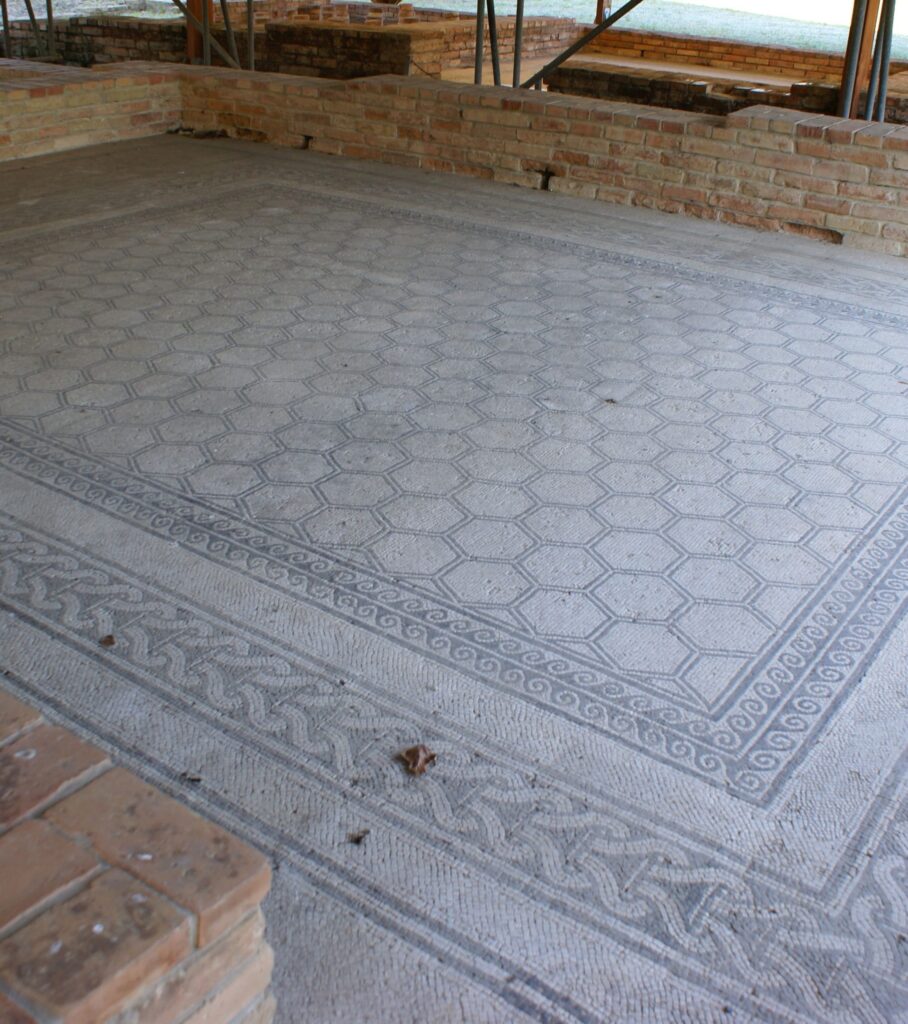
Located almost equidistant from Lugo, Faenza, and Ravenna, and on the communication route that still connects the latter two, Russi became a strategic center from the Middle Ages onwards, contested between the Manfredi of Faenza and the Da Polenta of Ravenna, who fortified this small cluster of houses in the 14th century. Traces of the castrum walls, two of the corner towers, and, within what was the hospital complex, the square-plan keep (now the Civic Museum) can still be seen. The museum exhibits paintings, altarpieces, religious images, majolica, sacred vestments, maps, and drawings of the Russi area from the Municipal Historical Archive, significant testimonies of Luigi Carlo Farini and Alfredo Baccarini (including watercolors and sculptures), and works by exponents of 20th-century painting in Russi such as Silvio Gordini and Cino Cantimori. The ground floor houses the Archaeological Museum, displaying terracotta vases, a gold earring, coins, bronze jugs, animal skeletons, mosaics, plasters, and bricks – all finds from the Roman Villa, the true jewel of this city in the heart of Romagna. Often overlooked by main tourist and cultural itineraries, it instead deserves special attention. Discovered in 1938 and subject to excavation campaigns from 1951, it is one of the most exemplary and well-preserved rustic villas in northern Italy, seeing its major development phase between the 1st and 2nd centuries AD. Divided into two distinct sectors – a residential one for the landowner (dominus) and a productive one for all functions related to the farm’s needs and product storage – the villa still preserves many of the mosaic floors from its various rooms in excellent condition. Since 1995, this archaeological area has been part of an ecological rebalancing zone located within an exhausted clay quarry, comprising different landscape units: hydrophilic woodland, mesophilic woodland, flooded meadow, stable grassland, and a perennial pond.
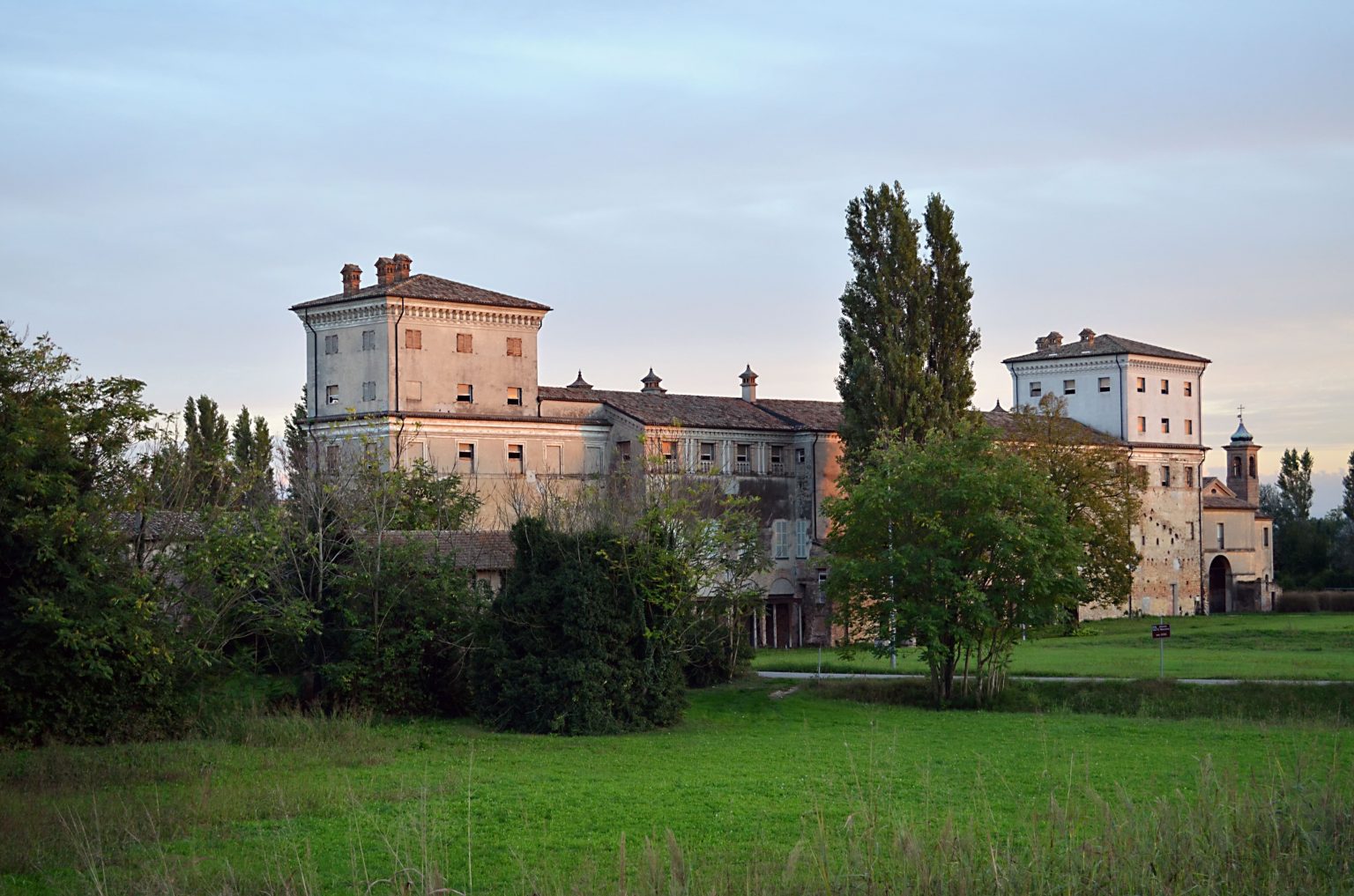
Another highlight, unfortunately “faded” over the years but still showing its beauty behind the marks of time and human neglect, is Palazzo San Giacomo. Located two kilometers from the town, reachable via the “triumphal” Vicolo Carrarone framed by poplar trees, this imposing building was the summer residence and administrative center for the agricultural estates of the Rasponi family, one of the noblest and most powerful in Romagna. Built at the end of the 17th century, it still retains the attached chapel dedicated to San Giacomo from 1774.
The interiors constitute the vastest cycle of paintings in Romagna from the 17th-18th centuries, with works by artists such as Philip Jakob Worndle, Ercole Sangiorgio, Giuliano Roncalli, Cristof Worndle, and Andreas Kindermann. Bordered by the Lamone River, which also defines the city’s western boundary, it is a place of great charm, used today for theatrical and musical events like the “Ravenna Festival”. In 2020, a project was developed to restore part of the ground floor to transform it into a “Museum of the Plain” and include Palazzo San Giacomo as one hub of a “Diffused Park” that also includes the nearby Roman Villa.
After a long period of closure and subsequent restoration, the Teatro Comunale regained part of its ancient splendor in 2001, having lost the decorations by Silvio Gordini, who adorned the boxes with floral festoons and painted medallions with portraits of famous artists on the ceiling. Built at the end of the 19th century, the project was entrusted to engineer Giuseppe Tramontani, who designed the hall according to the classic Italian style: an auditorium with two tiers of boxes and a gallery arranged in a horseshoe shape. Today it offers an interesting program of music, drama, dance, and theater for young people.
Unnoticed among the houses in the historic center is the Chiesa del Carmine, founded in 1616, rebuilt and enlarged in 1748, as a small oratory built inside one of the towers of the ancient city fortress. Dedicated to the Madonna of Mount Carmel, depicted in the 18th-century statue by the Faenza artist Giovan Battista Ballani Graziani, the church features the emblem with the mountain and three stars on the floor and vault. Surrounding the altar are four rosettes representing saints linked to the Carmelite cult, painted between the 18th and 19th centuries. On the ceiling, one can also admire decorations with flowers and garlands made in 1930 by the Forlì decorative painter Cesare Camporesi. In the past, a 17th-century canvas was also displayed here (now in the parish house), depicting not only the Madonna but also the two patron saints of the city, the Blessed Margherita Molli and Gentile Giusti, whose relics are devoutly kept in the main church dedicated to Sant’Apollinare.
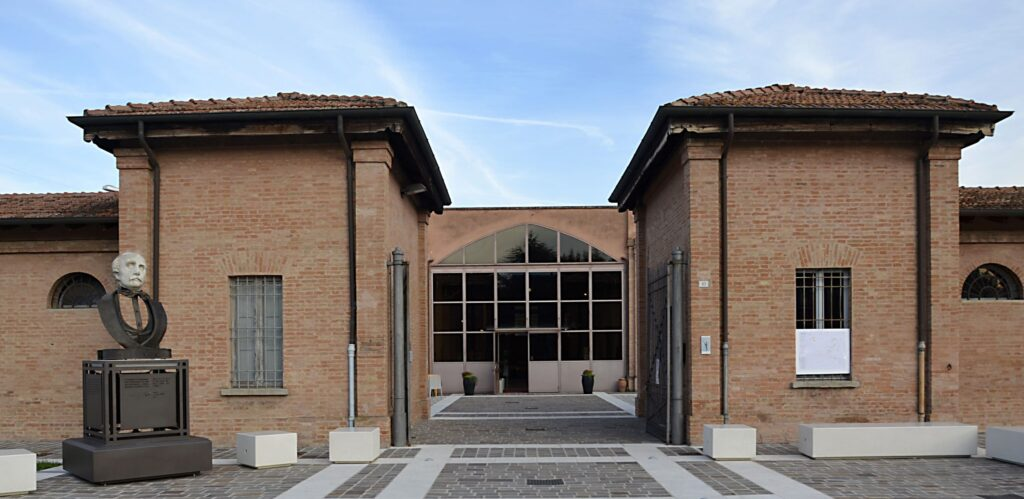
The restoration of the former municipal slaughterhouse, a 19th-century building representing an important document of industrial archaeology, now housing the library and cultural activities, is also noteworthy. In 2018, a work resulting from a project to enhance the figure of Luigi Carlo Farini was placed at the entrance. It recontextualizes, through the partial reconstruction of the original bust using iron elements recalling the original sculptural and volumetric features, the fragment of the head of the statesman from Russi. This fragment was part of the monument dedicated to him, created by the Ravenna sculptor Enrico Pazzi in 1878. Although placed in front of the Ravenna railway station, it was destroyed by bombings in 1944. A plaster model of the monument is also preserved in the city’s Pantheon.
Article published on piunotizie.it.
Share